Bi-fold wallet made from stainless-steel woven fabric
A wallet constructed from woven stainless-steel mesh that’s stitched into layers to form card pockets. The sheets of metal fabric (back layer plus one or more front layers) surround cards completely, and the mesh blocks RF radiation so RFID-enabled cards are shielded when inside. Intended users are people who want durable wallets and RFID blocking for smart cards.
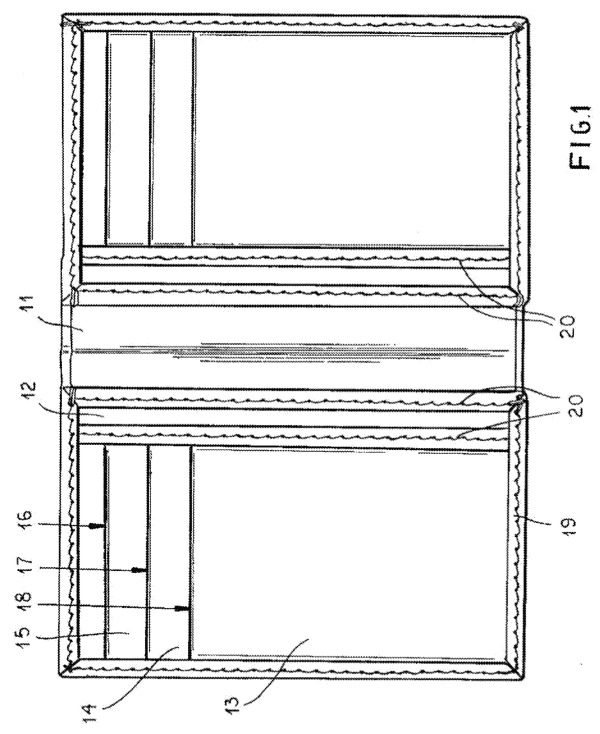
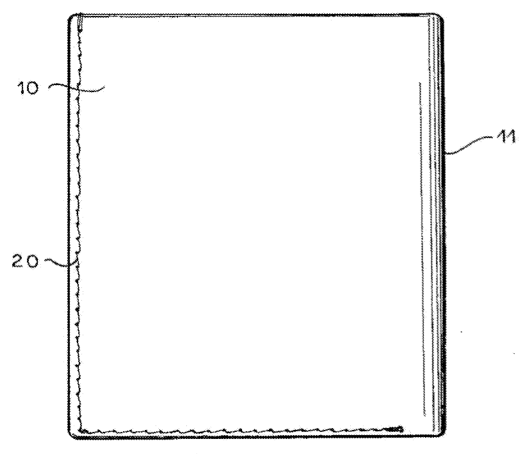
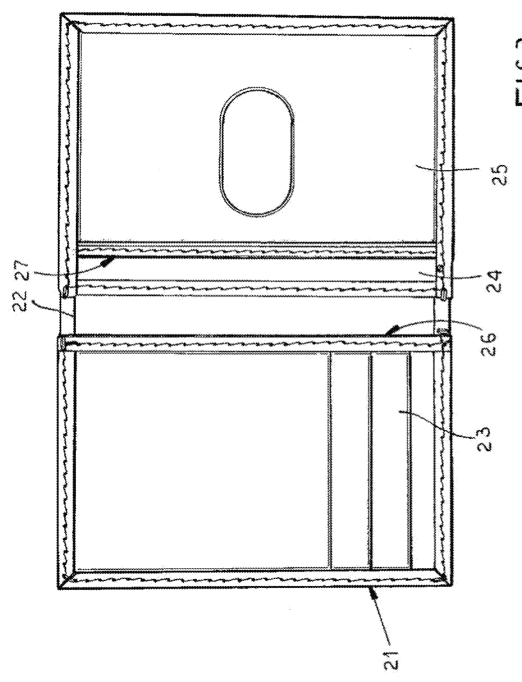
(57) What the patent covered
The independent claim covers a wallet assembled from a back layer and multiple front layers stitched around part of their perimeter to form pockets sized to completely surround a smart card, where all layers are made of a stainless-steel woven mesh fabric that is capable of blocking radio-frequency radiation.
The distinctive part: Using a fine stainless-steel woven mesh as both the structural material for wallet layers and as an RF shield, with specified mesh/thread dimensions.
Novelty 3/5. At filing time metal or laminated RF-blocking wallets existed, but using a woven stainless-steel fabric as the primary structural material for a stitched wallet was a practical improvement on familiar RFID sleeves and leather wallets.
Making it
Cut woven stainless-steel mesh panels, stitch front layers to a back panel around partial perimeters (likely with stainless-steel or synthetic thread), trim and fold into a bi-fold or multi-pocket wallet; finishing and optional edge treatments by hand or light machinery.
Materials: stainless-steel woven mesh (Inox 316L suggested), stainless-steel thread or polyester/cotton stitching (possible), optional lining (not clearly claimed)
Manufacturability 4/5. Requires cutting and sewing (or industrial stitching) of metal mesh and handling of several panels; tooling is straightforward but sew heads and thread choice must handle metal mesh and avoid fraying; part count is modest.
Is anyone buying?
This design, or something very close to it, is on sale now. Typical retail price: $65–$66. Multiple retailers offer RFID-blocking wallets with woven stainless steel or steel mesh designs; Adafruit lists a Stewart/Stand-styled wallet at $66; Kohl's & Stewart/Stand presence indicate ongoing demand; brand pages emphasize RFID-blocking tech.
- Stainless Steel RFID Blocking Wallet · Adafruit Industries$66.00
- Stainless Steel Wallet (Stewart/STAND) – RFID blocking wallet · STEWART/STANDstarting at about $65
- RFID Blocking Stainless Steel Credit Card Holder Wallet · Kohl's
This demand check was run with a web search in the week of Oct 5, 2026. Listings change often, so treat it as a starting point for your own research.
Who buys it: people who carry RFID smart cards and want a durable, metal-look wallet
Sourcing
Factories already list this kind of product on supplier marketplaces, at about $1.60–$1.80 per unit with minimum orders around 1 units. Against the typical retail price, that factory cost is roughly 2–3% of the shelf price before shipping, duties and marketplace fees. Two real listings found: a mass-market Alibaba listing with explicit per-unit pricing and MOQ; and a Made-in-China listing from Sview Electronics with OEM/ODM potential but price not listed. Other Made-in-China/GLOBAL SOURCES pages exist but do not display current unit prices.
- Alibaba Wholesale RFID Anti-Theft Smart Wallet · Alibaba.com · MOQ 10-199 pieces$1.60 - $1.80 per unit
- Sview Electronics Co., Ltd. · Made-in-China.com · MOQ 1 piecenot listed
Supplier prices come from public listings found with a web search and are usually quoted before customization, shipping and duties, so use them to judge whether a product is worth a quote request.
Before you make it
We didn't find any related continuation or divisional patents still in force, although that doesn't rule out design patents, trademarks or unrelated patents covering the same product.
Practical issues include stitching and edge comfort (metal mesh can be stiff or abrasive), weight and cost of 316L mesh, and crowded RFID-wallet market; patent lapsed so no enforceable protections.
Owners occasionally revive lapsed patents (about 1.5% are), and this page is a research lead rather than legal advice, so get a freedom-to-operate opinion before you manufacture anything.