Point-and-tap camera recognition for plated food items in a cafeteria
A camera-based checkout aid that shows a live image of a tray of multiple food items, lets an operator tap a location to place a fixed-size selection frame around the assumed item, runs feature-based recognition inside that frame and returns the top candidate, and if the operator requests a change it offers alternate candidates. It is aimed at cafeterias or canteens where staff or users quickly select items from a tray rather than rely on container recognition.
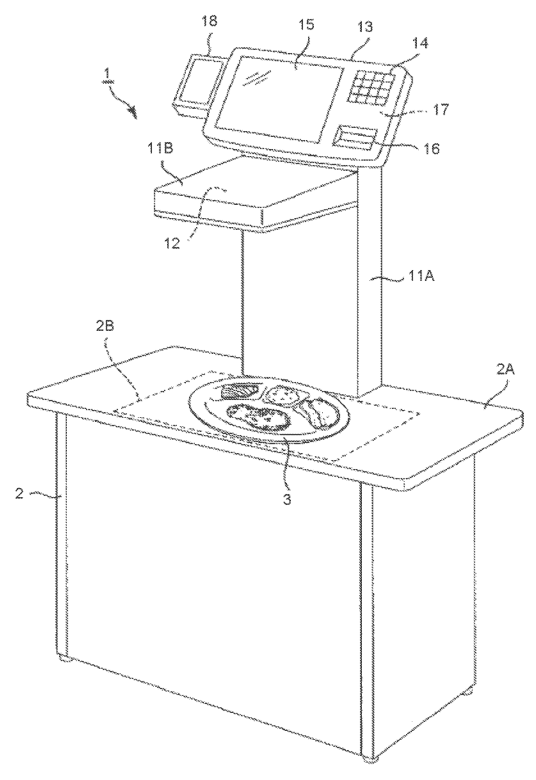
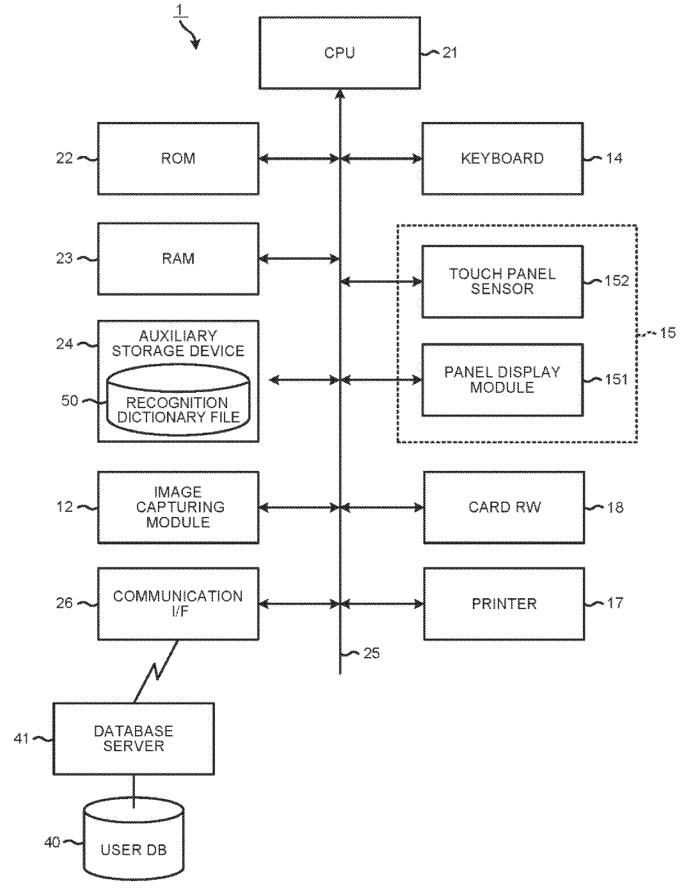
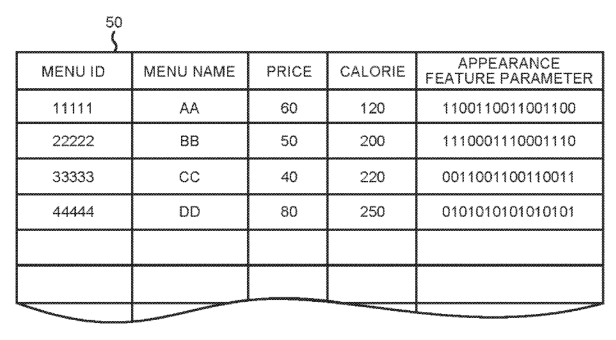
(57) What the patent covered
The device captures an image of multiple commodities, displays it, counts whether a selection frame already exists, when the operator taps it either creates a fixed-size frame around the tapped position (if none) or interprets a subsequent input as a position check, runs feature-based recognition on the image area inside that frame to produce ranked candidate commodities, outputs the top-ranked candidate's information, and if a change instruction is received, outputs an alternate candidate selected from the ranked list.
The distinctive part: Tightly couples a simple tap-driven fixed-size frame UI with on-frame feature matching and a ranked-candidate change flow intended for fast cafeteria checkout.
Novelty 3/5. When filed (around 2013) computer-vision recognition and candidate ranking were known, but integrating a tap-to-place fixed-size frame and a simple change-instruction to pick lower-ranked candidates for cafeteria tray workflows was a practical UI-plus-recognition combination rather than a wholly new algorithm.
Building it
A small team would mount an off-the-shelf USB camera above the tray area, build a web or native UI that streams the camera and implements a tap/click that draws a fixed-size rectangle, run a lightweight CNN or classical feature extractor (SIFT/ORB or MobileNet features) on the pixels inside the rectangle to produce embeddings, compare against a local catalog of item embeddings to get ranked candidates, and show the top match with an "other" button that cycles alternate candidates. Use a small SQLite catalog and a simple REST or local inference server for the model.
Components: RGB camera (mounted over checkout area), Display with touch or click input, On-device processor and memory, Recognition model/dictionary and feature-extraction software
Buildability 5/5. Straightforward hardware and software; the main work is collecting representative images per menu item and tuning the recognition model for varied plating and occlusion.
Is anyone buying?
Comparable products exist; none doing exactly this was found. Market has several documented entrants focusing on vision-based tray/dish recognition for cafeteria self-checkout; some vendors emphasize AI-driven recognition for trays, with implementations in campus, corporate, and large-scale cafeteria settings.
- Tiliter Product Recognition (AI-based visual recognition for... · Tiliternull
- FR Series AI Food Recognition for Self-Service Checkout · Posiflexnull
- VisionCheckout (AI-based visual dish recognition for self-service trays) · Zucchetti (VisionCheckout)null
This demand check was run with a web search in the week of Oct 5, 2026. Listings change often, so treat it as a starting point for your own research.
Who buys it: cafeterias, school dining services, corporate canteens
Before you make it
We didn't find any related continuation or divisional patents still in force, although that doesn't rule out design patents, trademarks or unrelated patents covering the same product.
Accuracy depends on good training images and consistent camera setup; crowded market for food-recognition models and potential privacy or food-labeling regulations to consider.
Owners occasionally revive lapsed patents (about 1.5% are), and this page is a research lead rather than legal advice, so get a freedom-to-operate opinion before you manufacture anything.