A foot-operated circular computer mouse pad
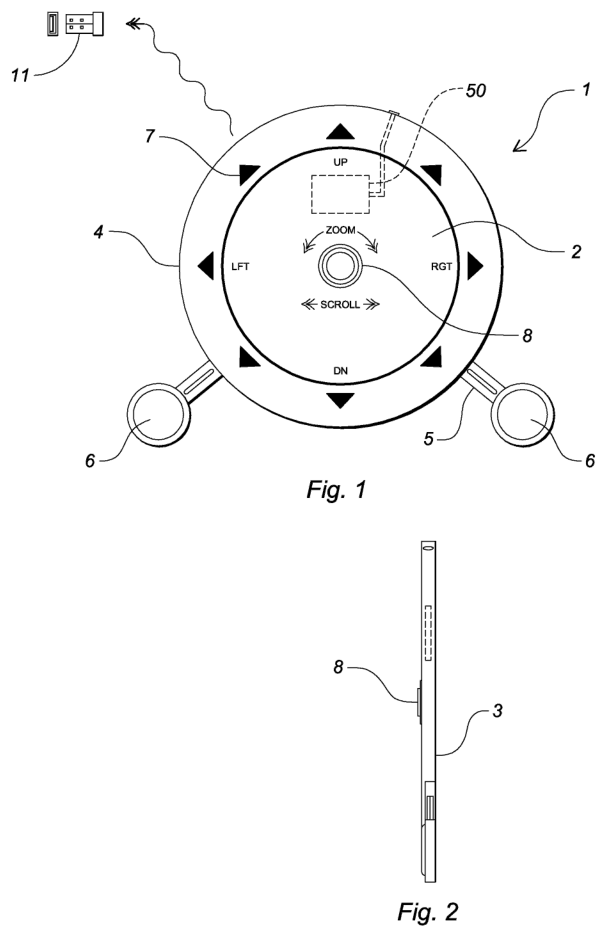
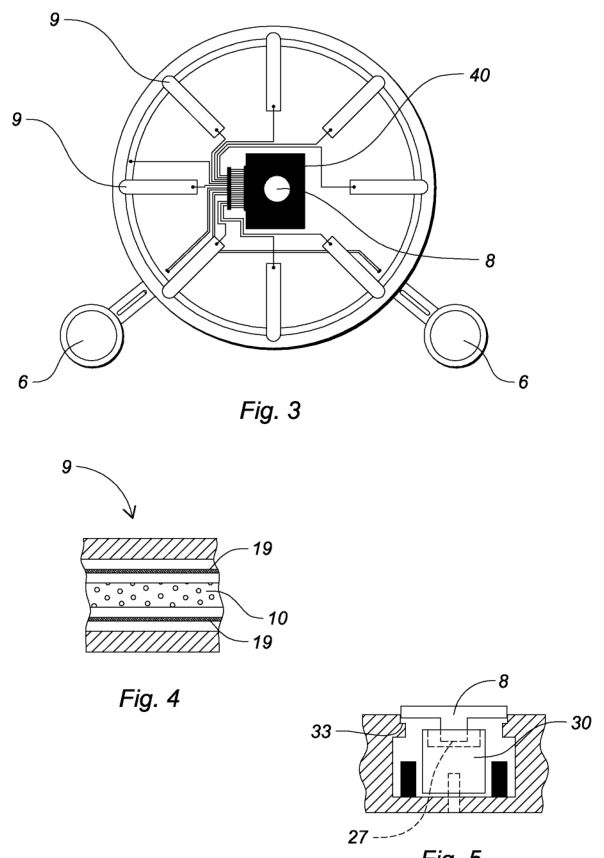
This patent describes a substantially circular, flat pad intended to be operated with a user’s foot instead of a hand. The pad has a planar top and bottom, with two outward arms each ending in a switch that serve as left/right buttons, a set of directional arrow buttons on the periphery of the top to move a cursor, and a central zoom/scroll button; it connects to a computer to control the cursor and screen content. The target user is someone who wants to avoid hand or wrist strain and would operate pointer functions with a foot while seated at a computer.
(57) What the patent covered
The main independent claim covered a flat, substantially circular pad with a planar top and bottom, two arms extending from the peripheral edge each terminating in a control button, and those control buttons being linked to a computer to perform discrete cursor/control functions when depressed by a user’s foot. A related independent claim added peripheral multidirectional arrow controls on the pad’s top (and a central zoom control) that move the cursor in discrete directions when pressed by a foot.
The distinctive part: Converting all typical mouse controls, left/right buttons, directional cursor movement and zoom/scroll, into foot-operable switches arranged on a flat circular pad with outward arms for the primary buttons.
Novelty 3/5. This is a clever reconfiguration of conventional mouse functions into a foot-operated pad; foot pedals and foot switches existed, but arranging multidirectional arrow pads and outward arms on a circular foot pad for full cursor control was not a ubiquitous arrangement when filed.
Making it
Injection-molded plastic body, overmolded or glued rubber button caps, standard snap-in micro-switches or membrane switch sheet, PCB for USB/Bluetooth interface, final assembly and testing by hand.
Materials: ABS or other injection-moldable thermoplastic for the housing, rubber or silicone for tactile button surfaces, membrane or micro-switches for the buttons, rubber feet or non-slip base material
Manufacturability 4/5. Few molded parts but multiple discrete switches and an internal PCB; tooling for the circular housing and arms is straightforward, with moderate hand assembly to install switches and cable/BLE module.
Is anyone buying?
Comparable products are on sale; this exact design wasn't found. Uses Bluetooth; marketed for hands-free cursor control and left/right click with feet; product pages emphasize accessibility and RSI relief; US-based contact listed.
- Boomer the Foot Mouse · Dental RAT (store.dentalrat.com)
This demand check was run with a web search in the week of Oct 5, 2026. Listings change often, so treat it as a starting point for your own research.
Who buys it: people with repetitive strain issues who want to reduce hand use; accessibility buyers
Before you make it
We didn't find any related continuation or divisional patents still in force, although that doesn't rule out design patents, trademarks or unrelated patents covering the same product.
Practical risks include limited market adoption, ergonomics/usability concerns, and potential need for driver/software support; nothing in this brief is legal advice about patent rights.
Owners occasionally revive lapsed patents (about 1.5% are), and this page is a research lead rather than legal advice, so get a freedom-to-operate opinion before you manufacture anything.