Perforated flange insert that damps TXV, evaporator gurgle
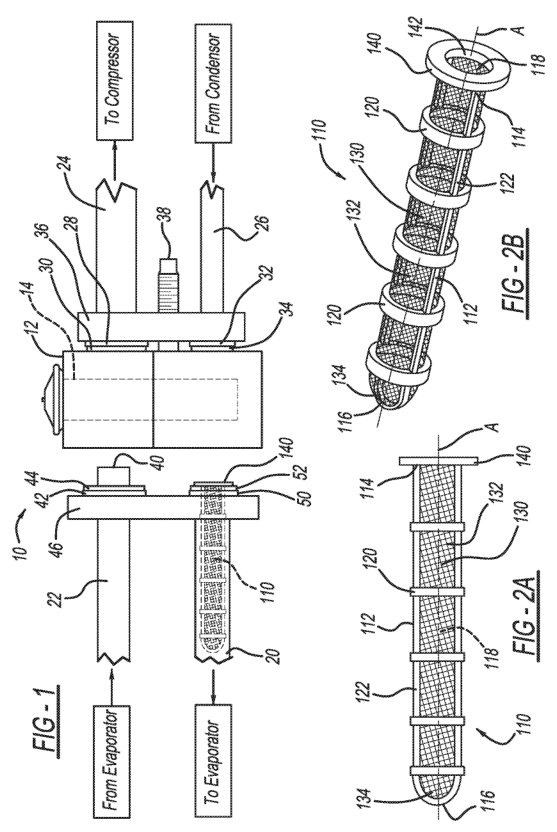
A tubular noise-reduction insert that fits into the refrigerant inlet between a thermal expansion valve (TXV) housing and an evaporator. It is a hollow body with a flange on one end and a perforated wall or mesh on the body so refrigerant flows through the center aperture into the inner volume and then out through many small openings, reducing high-velocity excitations that cause hiss and gurgle. Intended users are automotive HVAC equipment makers and service parts suppliers for vehicle evaporators and HVAC lines.
(57) What the patent covered
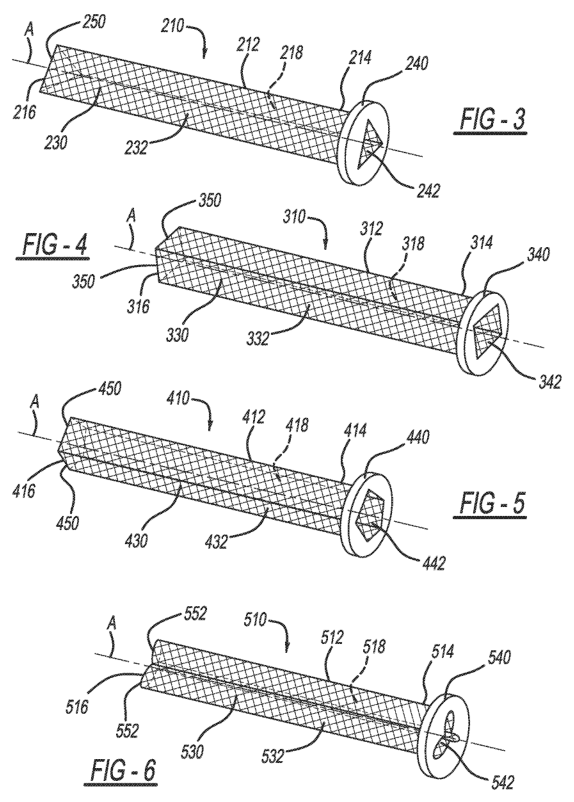
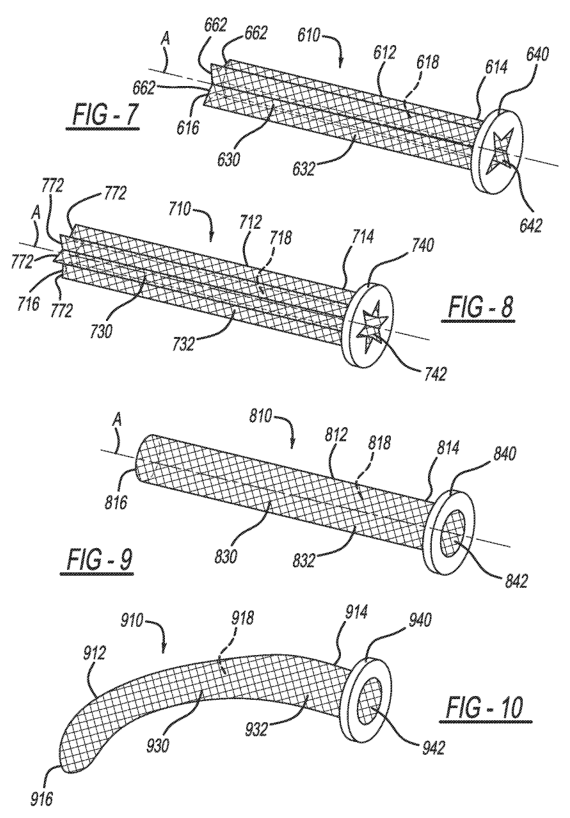
The main independent claim covers a body that defines an inner volume and runs along a longitudinal axis, a perforated portion (openings or mesh) that lets fluid pass from the inner volume outward, and a flange at one end with a central aperture for fluid to enter; the claim specifies the perforated portion may be polymeric, metallic, or nylon mesh and that the flange’s outer diameter exceeds the inner diameter of the fluid line so the insert cannot be pushed through the line.
The distinctive part: Putting a perforated/meshed, hollow insert with an inlet flange directly into the TXV-to-evaporator line to create a small chamber that vents through many small holes to break up high-velocity jets and acoustic modes.
Novelty 3/5. At filing time designers used damping layers or external dampers; this is a straightforward fluid-path modification that’s a clever improvement on existing passive noise-suppression approaches rather than a wholly new HVAC component.
Making it
Likely injection-molded polymer body with overmolded or separately attached flange, and either molded perforations or a press-fit/adhesive-mounted metal/nylon mesh; simple hand assembly or ultrasonic staking to secure mesh.
Materials: Injection-molded engineering polymer (e.g., nylon or PBT), Metal mesh (stainless steel) as alternate perforated portion, Rubber or elastomer for any sealing feature (likely)
Manufacturability 4/5. Few molded parts and a mesh insert or molded perforations; tooling for an injection mold and a simple assembly step are required but nothing exotic.
Is anyone buying?
We haven't run a demand check on this one yet. Shoppers would likely search for evaporator noise reduction insert, TXV inlet baffle mesh, HVAC refrigerant flow damper insert; the links on the right open those searches.
Who buys it: automotive HVAC manufacturers and service-parts purchasers
Before you make it
We didn't find any related continuation or divisional patents still in force, although that doesn't rule out design patents, trademarks or unrelated patents covering the same product.
Practical risks include pressure, compatibility with refrigerant/oil and temperatures, and potential impact on TXV metering or flow, materials and sizing must meet HVAC service and safety standards; no legal advice on patent status.
Owners occasionally revive lapsed patents (about 1.5% are), and this page is a research lead rather than legal advice, so get a freedom-to-operate opinion before you manufacture anything.