Bedside monitoring device with microphones, environmental sensors and cloud voice control
A bedside or near-user monitoring system that combines one or more microphones, environmental sensors (air quality, sound level/quality, light quality, ambient temperature), a wireless transmitter, and a separate motion-detection apparatus to infer sleep, respiration or sleep behavior. The device talks to a cloud system with a user database and a speech-recognition module that can initiate actions when it detects a voice command. Intended users are consumers and clinics interested in passive sleep and ambient monitoring with voice interaction.
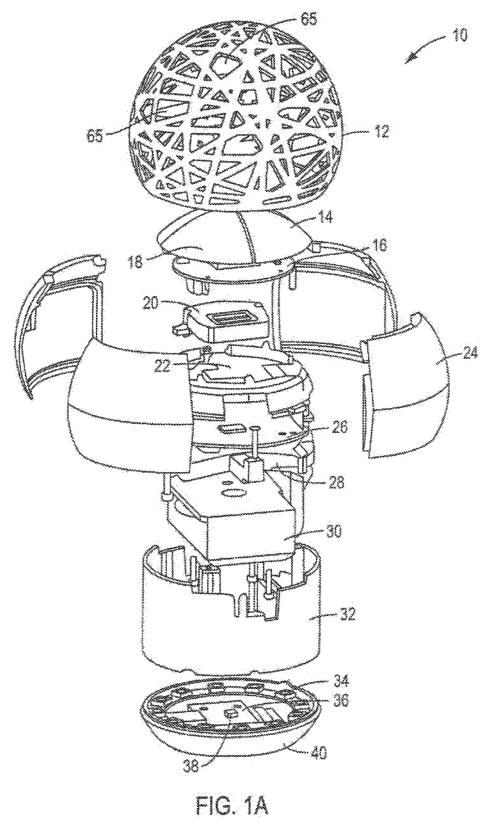
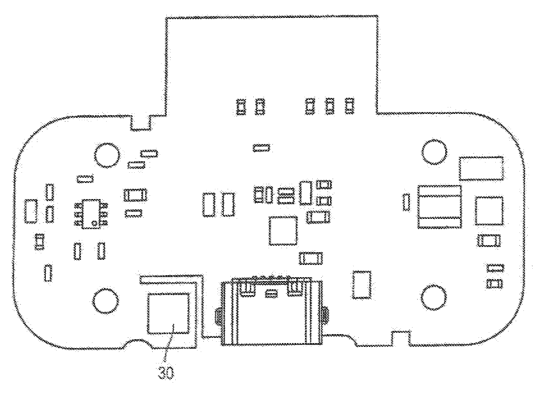
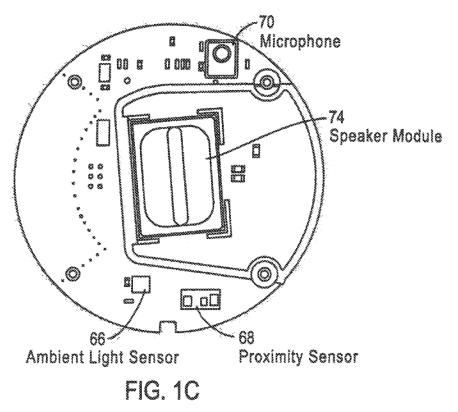
(57) What the patent covered
The main independent claim covered a system made of: a user monitoring device containing one or more microphones, a transmitter and sensors for air quality, sound level/quality, light quality and ambient temperature; a motion detection apparatus that supplies user movement data to help determine sleep or respiration information; a cloud-based system with a user database in communication with the device and motion apparatus; and a speech-recognition system coupled to the cloud that can initiate communication when it identifies a voice command.
The distinctive part: Combining local environmental and audio sensing with a separate motion detector and cloud-based speech recognition tied to a user database to produce sleep/respiration inferences and initiate voice-driven interactions.
Novelty 3/5. At filing time consumer sleep monitors, smart speakers and environmental sensors existed separately; the patent tied those elements together into a single monitoring-flow for sleep/respiration with cloud voice control, which is a clever integration rather than a wholly new category.
Making it
Injection-molded plastic housing, PCB with surface-mount components and MEMS sensors, wired/wireless module assembly and final testing; motion detector provided either as a separate PIR/accelerometer module or paired wearable with separate sourcing.
Materials: ABS or PC injection-molded housing, MEMS microphone(s), electrochemical or metal-oxide air-quality sensor, digital temperature/light sensors, low-power RF module (Bluetooth/Wi‑Fi)
Manufacturability 4/5. Typical consumer-electronics build: several SMD parts and sensors on a PCB, one or two molded enclosures, and hand or semi-automated final assembly; sourcing multiple sensor types and certification (wireless, EMC) add complexity.
Is anyone buying?
Comparable products are on sale; this exact design wasn't found. Typical retail price: $149. Several new or ongoing entrants in bedside sleep/environment monitoring with cloud-enabled AI or coaching (Naptick launched in 2026 with pre-order pricing; Ultrahuman markets an ambient sleep monitor with cloud reports and privacy options; Dreamie is marketed as a sleep companion with sleep insights on the roadmap).
- Naptick AI Sleep Companion · Naptick (NapLabs Solutions)149.00
- Ultrahuman Home (ambient sleep monitor with environment sensing... · Ultrahuman
- Dreamie Bedside Sleep Companion (ambient sleep insights with... · Ambient
This demand check was run with a web search in the week of Oct 5, 2026. Listings change often, so treat it as a starting point for your own research.
Who buys it: clinics, sleep coaches, health-conscious consumers looking for non-contact sleep monitoring
Sourcing
Factories list related products that could likely be adapted. No Alibaba/Global Sources/DHgate listings with explicit OEM-ready bedside sleep devices featuring cloud voice control and multi-environment sensors were found. The closest examples are consumer-focused bedside sleep devices with environmental sensing and voice capabilities (SleepOrora, Naptick, Sleepal Lamp). These pages do not display bulk pricing or MOQs publicly; they appear to be direct-to-consumer or mixed product offerings rather than stated factory listings. This suggests OEM/private-label opportunities may exist but require direct inquiries to the vendors or their manufacturing partners for quotes and minimum order quantities.
- SleepOrora (Sleep monitoring with environmental sensors and voice... · https://sleeporora.myshopify.com/products/sleeporora-contactless-sleep-monitor · MOQ not listednot listed
- Naptick AI Bedside Sleep Device · https://launch.naptick.com/products/naptick-ai-bedside-sleep-device · MOQ not listednot listed
- Sleepal AI Lamp (bedside environmental sensing with voice features) · https://csa-iot.org/csa_product/sleepal-ai-lamp/ · MOQ not listednot listed
Supplier prices come from public listings found with a web search and are usually quoted before customization, shipping and duties, so use them to judge whether a product is worth a quote request.
Before you make it
This patent has 57 related US patents (continuation, divisional or parent) that may still be in force: US 9,576,236, US 9,655,558, US 9,569,720, US 9,569,719, US 9,756,403, US 9,542,685, US 9,582,749, US 9,723,898, US 9,427,190, US 9,610,030, US 9,380,941, US 9,320,435, US 9,582,748, US 9,553,486, US 9,662,015, US 9,501,735, US 9,704,209, US 9,427,189, US 9,361,572, US 9,445,651, US 9,424,508, US 9,634,921, US 9,436,903, US 9,530,089, US 9,420,857, US 9,055,791, US 9,462,856, US 9,427,053, US 9,414,651, US 9,367,793, US 9,420,856, US 9,427,160, US 9,159,223, US 9,406,220, US 9,345,403, US 9,526,422, US 9,398,854, US 9,149,189, US 9,204,798, US 9,345,404, US 9,339,188, US 9,392,939, US 9,357,922, US 9,532,716, US 9,298,882, US 9,432,091, US 9,737,214, US 9,330,561, US 9,320,434, US 9,430,938, US 9,407,097, US 9,425,627, US 9,438,044, US 8,810,430, US 8,850,421, US 8,803,366, US 9,993,166. Read their claims before going further.
Regulatory and privacy concerns (medical vs wellness classification, HIPAA/consumer audio data), plus crowded market with smart speakers and dedicated sleep trackers; patent lapsed so no claim enforcement but product claims were broad and integration-focused.
Owners occasionally revive lapsed patents (about 1.5% are), and this page is a research lead rather than legal advice, so get a freedom-to-operate opinion before you manufacture anything.