Wearable ECG that switches between analog and digital detection
A body-worn ECG module with multiple electrodes routes all electrode signals through a multiplexer to either a low‑power analog heartbeat detector or a higher‑power digital detection chain. A motion sensor tells the processor when to switch so the device uses the analog path at low motion and the digital path during activity or noisy conditions. Intended users are ambulatory patients and clinics deploying continuous or spot ECG monitoring on patients and caregivers fitting wearable patches or bands.
(57) What the patent covered
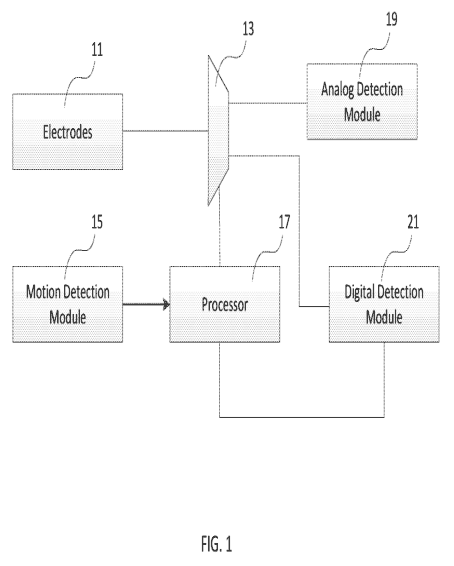
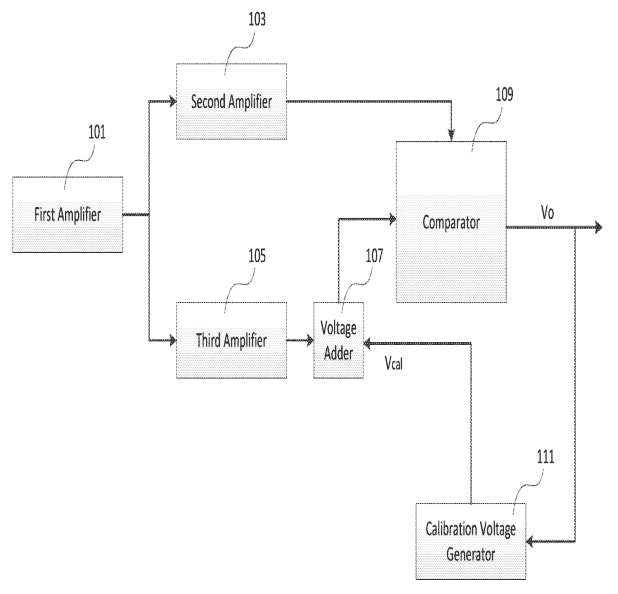
The main independent claim covers a system with multiple electrodes feeding a multiplexer that directs signals from all electrodes to one of two outputs; one output goes to an analog detection module that detects heartbeats using only analog circuitry, the other goes to a digital detection module (amplifiers, ADC, DSP). A processor, informed by a motion detection module, controls the multiplexer to select the analog or digital path based on detected acceleration.
The distinctive part: Tying a motion sensor to a multiplexer that routes all electrode channels either to a purely analog beat detector or to a full digital signal chain for noise-prone motion periods.
Novelty 3/5. Wearable ECG front ends, ADC+DSP chains and low‑power analog detectors were all known; the distinguishing idea was switching entire electrode sets between analog-only and digital processing depending on motion rather than a single fixed chain.
Making it
flex PCB or printed conductive traces for the electrode array, injection molded plastic enclosure, off-the-shelf MEMS accelerometer, surface-mount analog amplifier and ADC components, final assembly and potting/encapsulation by hand or machine
Materials: flexible PCB or polyester film substrate for electrodes, silver/silver‑chloride or conductive ink electrodes, silicone or polyurethane encapsulant, plastic housing (ABS or polycarbonate)
Manufacturability 4/5. Uses standard flex/rigid PCBs and common SMT analog and digital ICs plus a multiplexer; several PCB parts and hand or machine assembly but no exotic fabrication.
Is anyone buying?
Comparable products are on sale; this exact design wasn't found. Typical retail price: $411. Single-record, chest-worn 14-day patch; widely used in US; listed price by a US-based medical supplier.
- Zio Patch ECG Monitor (iRhythm Zio XT) · Bees Medical410.69
This demand check was run with a web search in the week of Oct 5, 2026. Listings change often, so treat it as a starting point for your own research.
Who buys it: clinics and remote‑monitoring services, patients needing ambulatory ECG monitoring
Sourcing
Factories list related products that could likely be adapted. No direct listings on Alibaba, Made-in-China, Global Sources, or DHgate for a wearable ECG patch that explicitly uses a motion-adaptive analog/digital switch via a multiplexer. Closest items are generic wearable ECG patches or ECG-enabled patches from manufacturers (e.g., PCARDIO, CorVitals, Movesense), but none clearly advertise the exact analog/digital routing architecture with a motion sensor-driven multiplexer. If you want, I can broaden the search to include standard ECG patch suppliers or OEMs that could custom-build this architecture and quote OEM/private-label terms.
Supplier prices come from public listings found with a web search and are usually quoted before customization, shipping and duties, so use them to judge whether a product is worth a quote request.
Before you make it
We didn't find any related continuation or divisional patents still in force, although that doesn't rule out design patents, trademarks or unrelated patents covering the same product.
Practical risks include meeting medical device electrocardiography and electrical safety standards, power budget tradeoffs for continuous accelerometer use, and a crowded market of validated wearable ECGs; the patent lapsed, so verify current regulatory and interoperability requirements rather than freedom‑to‑operate.
Owners occasionally revive lapsed patents (about 1.5% are), and this page is a research lead rather than legal advice, so get a freedom-to-operate opinion before you manufacture anything.