Vacuum crevice nozzle with external guide pin
A vacuum crevice tool that uses a flattened nozzle attached to a circular vacuum hose and an external guide that runs along the nozzle and inserts into the crack being cleaned. It’s meant for cleaning narrow cracks in concrete, tile grout joints or similar crevices before sealing or grouting. Users are tradespeople or homeowners preparing joints for repair or grouting.
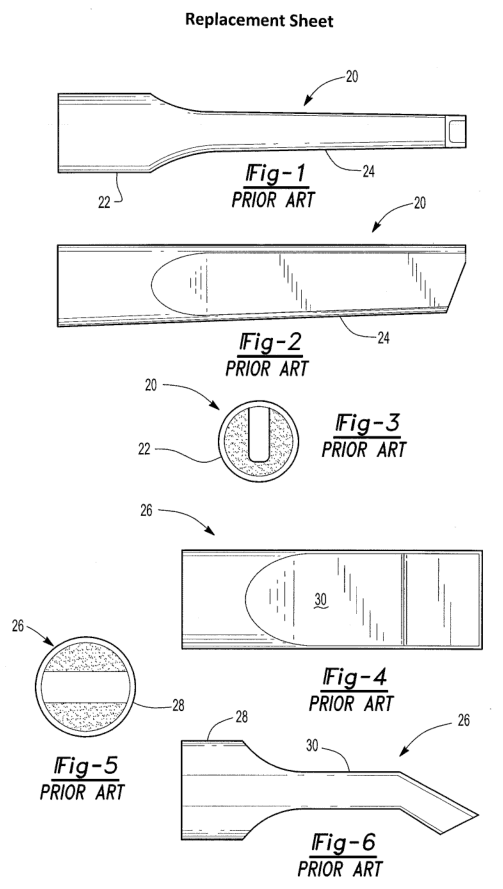
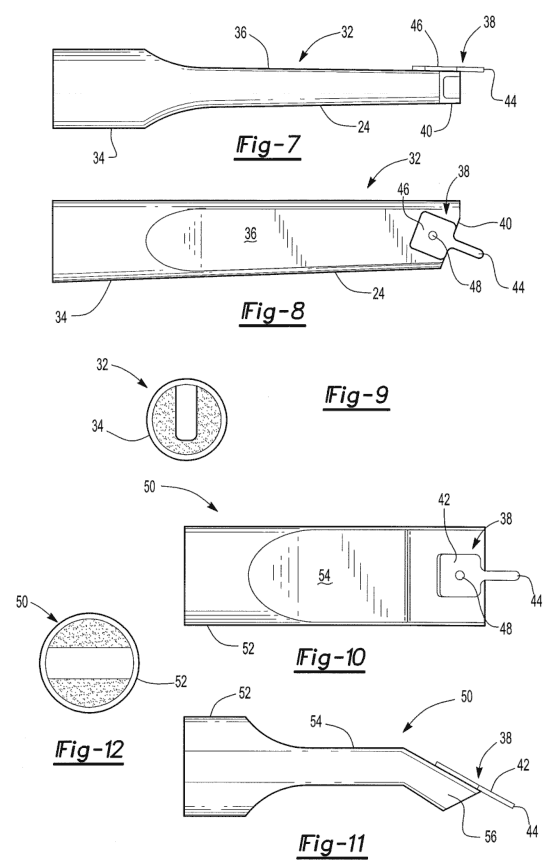
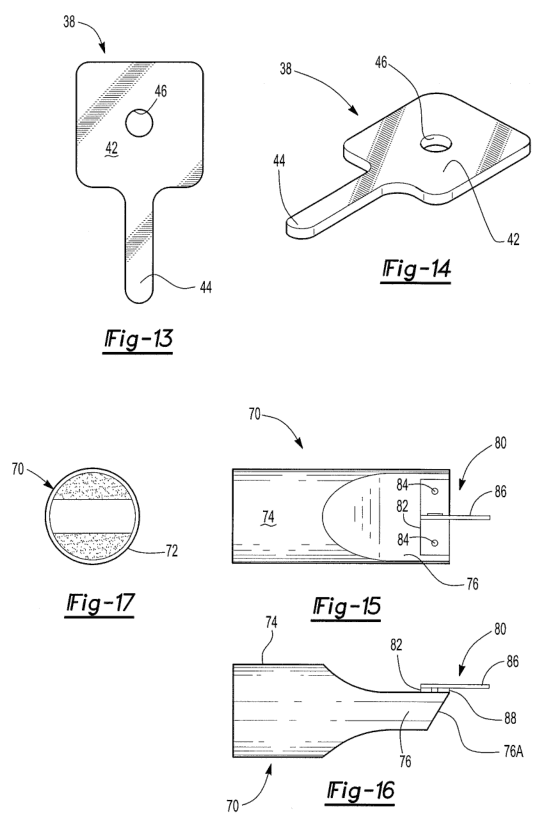
(57) What the patent covered
The main independent claim covers a crevice-cleaning nozzle with three elements: a circular cross-section tail that connects to a vacuum source, a flattened nozzle tip for placement next to a crack, and an externally mounted, parallel guide assembly at the nozzle’s end that has a head portion and an elongated portion sized to extend into the crack to guide the nozzle.
The distinctive part: Adding an externally mounted, parallel guide (a head plus an elongated probe) on the nozzle to insert into the crack and steer the crevice tool.
Making it
Injection-molded plastic nozzle body, stamped or drawn thin metal rod for the guide, press-fit or screw attachment, simple hand assembly.
Materials: ABS or polypropylene plastic body, rubber or silicone sealing lip (likely), stainless or plated steel for a narrow guide rod (possible), foam or felt brush insert (likely)
Manufacturability 4/5. One molded nozzle plus one or two simple metal or molded guide parts; low-cost tooling and simple assembly or retrofit clip-on part.
Is anyone buying?
Comparable products are on sale; this exact design wasn't found. Typical retail price: $15. In-stock RIDGID NXT Max crevice tool with 105 reviews on Home Depot listing; 2-1/2 in. attachment designed for tight spaces
- 2-1/2 in. MAX2502 NXT Max Locking Crevice Tool Accessory Shop... · The Home Depot$15.48
This demand check was run with a web search in the week of Oct 5, 2026. Listings change often, so treat it as a starting point for your own research.
Who buys it: tile installers, concrete repair crews, DIY homeowners prepping cracks
Before you make it
We didn't find any related continuation or divisional patents still in force, although that doesn't rule out design patents, trademarks or unrelated patents covering the same product.
Patent has lapsed; product is mechanically simple and crowded—watch for similar prior-art designs and functional vagueness in the specification.
Owners occasionally revive lapsed patents (about 1.5% are), and this page is a research lead rather than legal advice, so get a freedom-to-operate opinion before you manufacture anything.