Shower curtain liner with multiple hook rows and tear‑off bottom
A single-panel shower curtain liner with several horizontal rows of hook apertures at the top so you can hang the liner at different heights, and stacked perforation rows at the bottom so you can tear off sections as they get moldy or dirty. The liner also includes magnets at the lower edge to hold it to the tub and attachment means (snaps/Velcro/buttonholes) near the top to add a decorative outer panel; aimed at homeowners and renters who replace liners regularly.
(57) What the patent covered
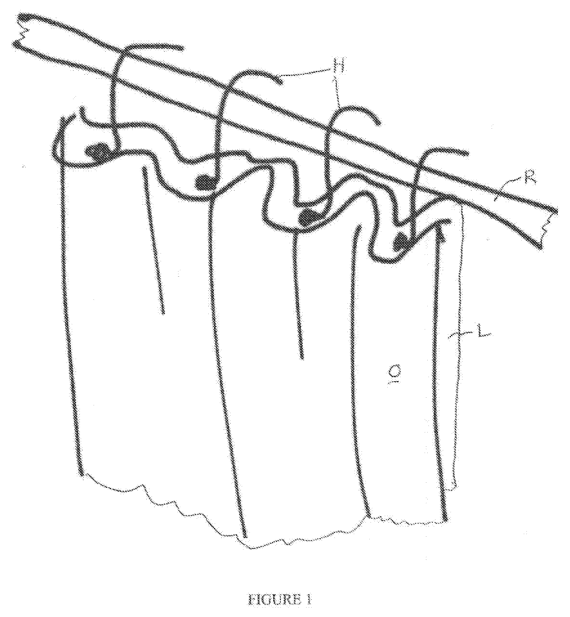
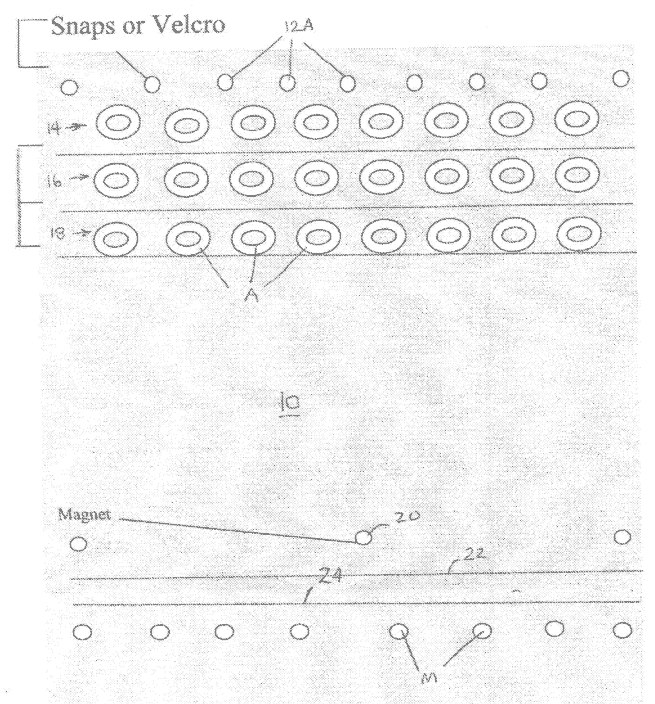
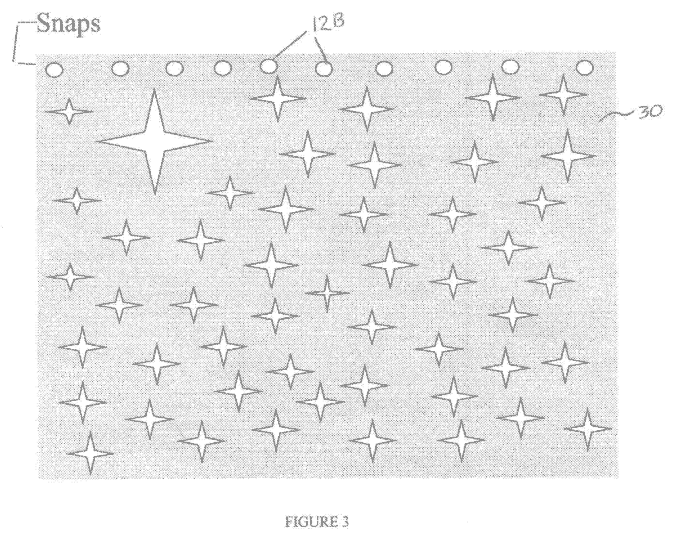
The independent claim covers one single downward panel that has at least two vertically aligned rows of hook apertures at the top so one hook can be placed through aligned apertures to change hanging height, plus stacked perforation rows at the bottom designed to be torn away one row at a time to shorten the liner, and a bottom edge sized to reach the tub or shower floor. A dependent element and another independent claim add at least three top rows and a means to attach an outer cover near the top.
The distinctive part: Top has multiple vertically aligned hook-aperture rows for selectable hanging height and bottom has removable perforation rows for reuse as a fresh hem.
Making it
likely cut/poly-weld or heat-seal plastic panel, embed or weld magnetic strip(s), punch stacked rows of reinforced apertures, add snaps/Velcro by heat-press or ultrasonic welding, pack; hooks and decorative outer panel sourced separately
Materials: PVC or PEVA shower-safe plastic, Magnetic strips (ferrous-backed or encased magnets), Snap or Velcro attachment hardware, Corrosion-resistant metal or plastic curtain hooks
Manufacturability 4/5. Mostly sheet plastic fabrication (die-cut, heat-seal), some added hardware (magnets, snaps) and simple assembly; standard curtain‑liner factories can produce it.
Is anyone buying?
Comparable products are on sale; this exact design wasn't found. Typical retail price: $5–$17. Magnets at bottom are common in many current liners; both listings show magnetic/heavy-weighted bottoms to help keep the liner in place.
- NÄLK Shower curtain liner, clear, 71x71" · IKEA$4.99
- Zenna Home Clear Heavyweight PEVA Shower Curtain Liner with... · Lowe's$16.53
This demand check was run with a web search in the week of Oct 5, 2026. Listings change often, so treat it as a starting point for your own research.
Who buys it: homeowners and renters replacing liners frequently
Before you make it
We didn't find any related continuation or divisional patents still in force, although that doesn't rule out design patents, trademarks or unrelated patents covering the same product.
Practical risks: crowded, low‑cost market for disposable liners; magnets must be sealed and corrosion‑resistant for wet use and perforation rows must not weaken top/side integrity.
Owners occasionally revive lapsed patents (about 1.5% are), and this page is a research lead rather than legal advice, so get a freedom-to-operate opinion before you manufacture anything.