Backpack with a dialed lace that curves the back panel
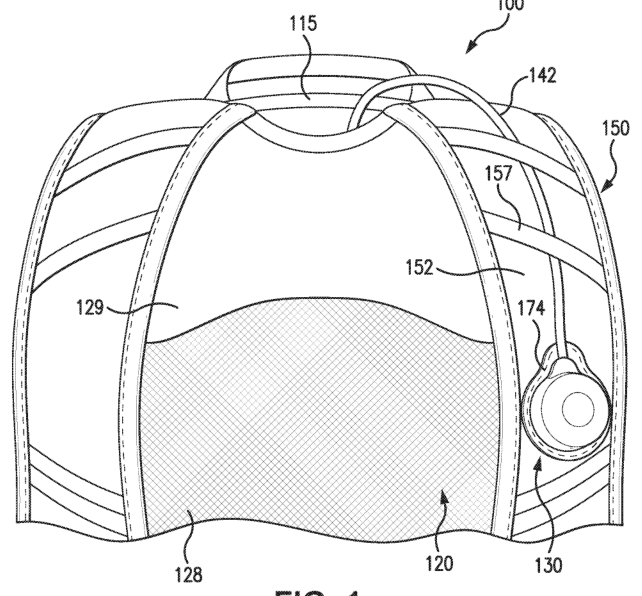
A backpack that uses a retractable lace and an adjustment device (dial) to pull a spacing panel toward the rear edge of the back panel, increasing the gap between the pack and the wearer. Pulling the lace makes the back panel curve and creates airflow; relaxing it flattens the pack for close carry (for example when carrying a laptop). Intended users are hikers and everyday pack users who want adjustable ventilation or profile.
(57) What the patent covered
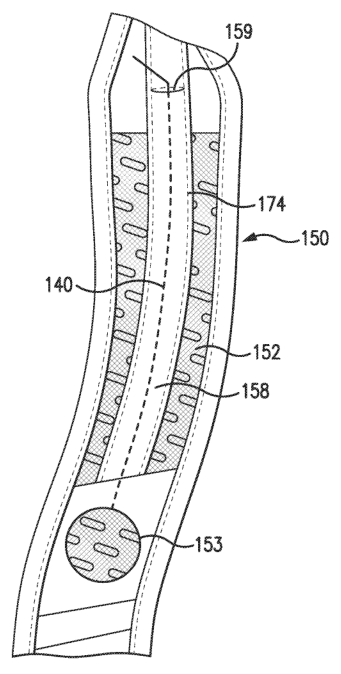
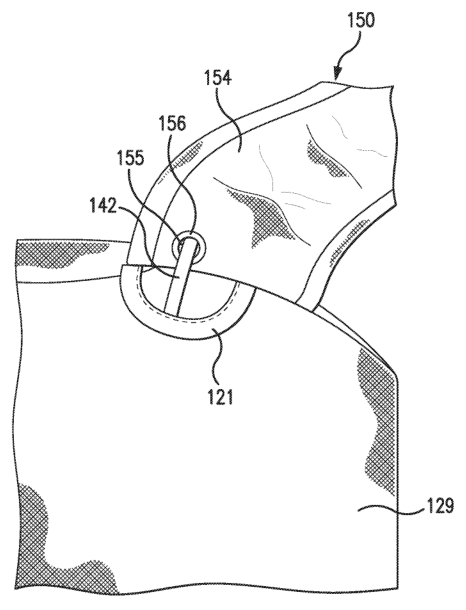
The main independent claim requires a back panel and a spacing panel with a fixed edge and a free edge, an adjustment device that retracts a lace which links to the spacing panel, and a shoulder strap routed so the lace passes from the strap’s exterior to interior; retracting the lace translates the spacing panel toward an edge of the back panel to increase the gap between spacing panel and back panel. A second independent claim specifies an adjustment dial, the lace routing through a first lace support on the spacing panel then a second lace support on the back panel, and that the lower portion of the spacing panel is attached to the lower portion of the back panel.
The distinctive part: A user-operable dial/lace system that actively pulls a spacing panel to curve the back panel and enlarge the air gap while the pack is worn.
Novelty 3/5. This is a practical improvement on familiar ventilated back panels and frame-stays: ventilated spacer meshes and fixed curved frames were common, but a dialed lace that actively changes curvature and gap while worn is a clever incremental change.
Making it
Likely cut-and-sewn textile construction with molded or stamped plastic dial and lace guides, possibly an injection-molded frame or molded polymer reinforcements, with hand assembly to route/secure the lace and attach shoulder straps.
Materials: nylon or polyester fabric for shell and spacer panel, mesh (synthetic) for the spacing panel mesh portion, braided cord/lace (nylon or polyester), plastic or metal adjustment dial and guides, polymer or composite frame/reinforcement (if present)
Manufacturability 4/5. Typical backpack construction: multiple sewn panels, routed cord and a small dial and guides; requires several sewn parts and some assembly but no electronics or precision machining. Tooling for a custom dial or molded lace guides may be needed.
Is anyone buying?
Comparable products are on sale; this exact design wasn't found. Typical retail price: $85–$150. Multiple retailers list ventilated back-panel designs (VaporSpan/open-flow back panels) for Gregory Arrio 24, indicating consumer interest in breathable/back-ventilating packs; several listings show ongoing availability or discounted outlet pricing.
- Gregory Arrio 24 Backpack · EMS (Eastern Mountain Sports)From $84.99
- Gregory Arrio 24 Pack · REI Co-op$149.95
- Gregory Arrio 24 Pack (2025) · REI Co-op$89.73
This demand check was run with a web search in the week of Oct 5, 2026. Listings change often, so treat it as a starting point for your own research.
Who buys it: hikers and commuters who want adjustable ventilation or a flatter profile for electronics
Sourcing
Factories list related products that could likely be adapted. Closest existing offerings are ventilation/back-panel spacers and adjustable back-ventilation accessories rather than an exact dial-and-lace back-curving system. A patent (US20170099932A1) describes a backpack using a lace and dial to pull a spacing panel to curve the back for airflow, serving as a functional reference for the concept.
- Ventagear · ventagear.com
- VentaPak · ventapak.com
- Alibaba (generic vented/back-panel accessories listing) · Alibaba.com
Supplier prices come from public listings found with a web search and are usually quoted before customization, shipping and duties, so use them to judge whether a product is worth a quote request.
Before you make it
We didn't find any related continuation or divisional patents still in force, although that doesn't rule out design patents, trademarks or unrelated patents covering the same product.
Practical issues include durability of the cord/dial under load, possible complexity in repair, and a crowded market for ventilated/back-adjustable packs; consider testing wear points (lace guides, strap routing) for abrasion and failure.
Owners occasionally revive lapsed patents (about 1.5% are), and this page is a research lead rather than legal advice, so get a freedom-to-operate opinion before you manufacture anything.