Underground tank that feeds a separate fertilizer irrigation loop
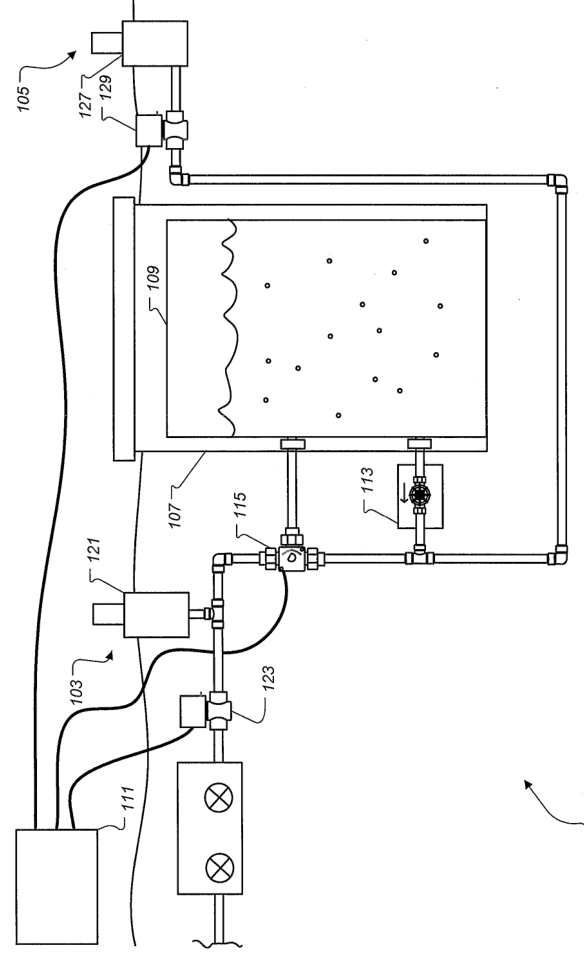
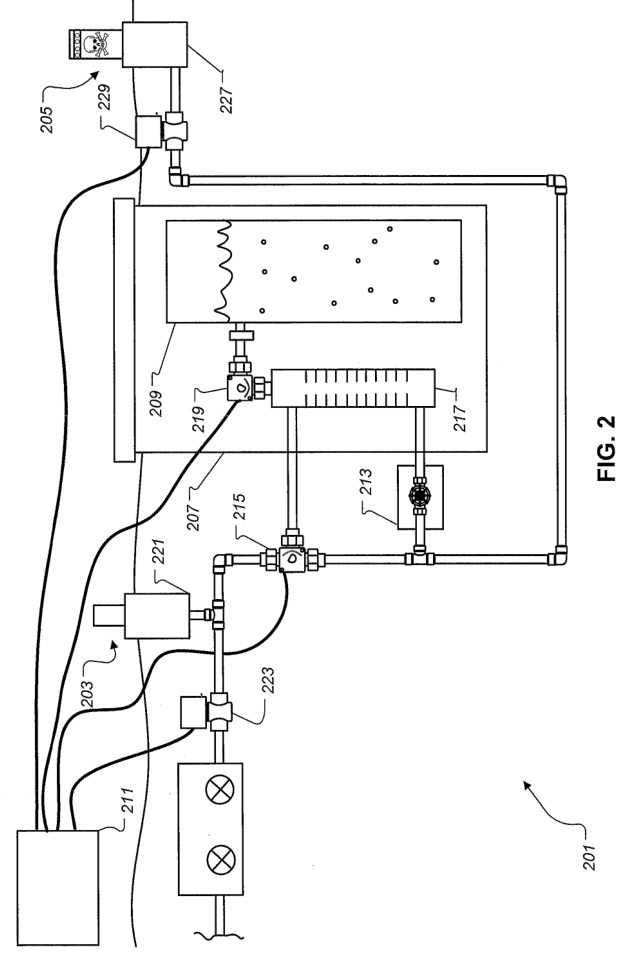
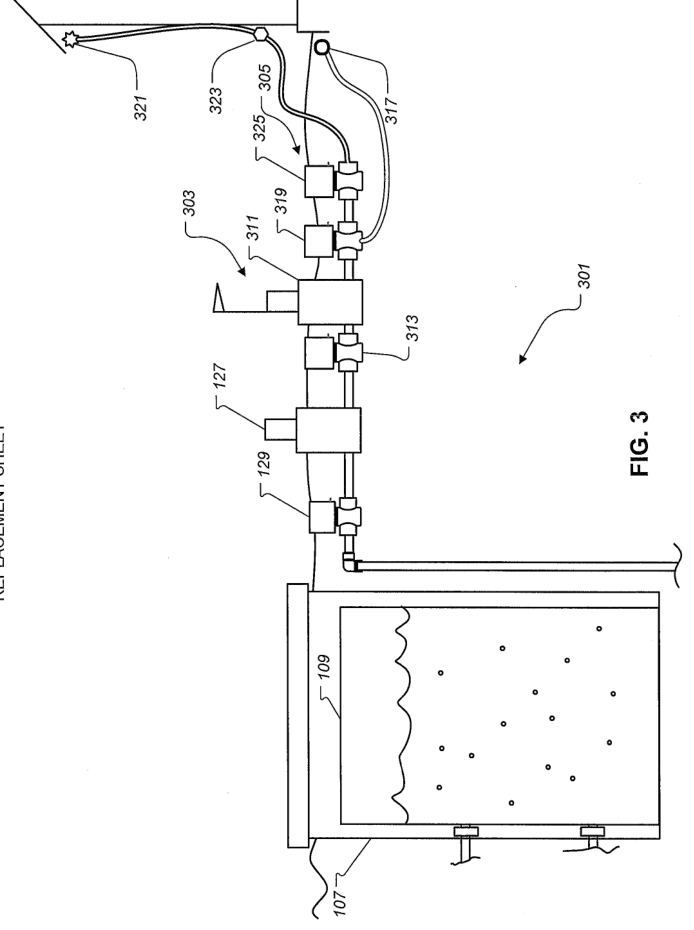
A buried storage tank holds liquid fertilizer or pesticide and connects to a dedicated second irrigation loop that has its own valve and sprinkler heads. The second loop is isolated from the regular potable/watering loop by a three-way valve and a one-way connection to the tank, so fertilizer can be supplied to targeted sprinklers without backflow into the main irrigation lines. Typical users would be landscapers, farmers with irrigation zones, or property owners wanting automated liquid application.
(57) What the patent covered
The main independent claim covered a system with two distinct irrigation systems: a first for water and a second for fertilizer/pesticide, each having its own valve, sprinkler head and pipe set; a storage tank partially located underground that feeds the second system through a one-way valve; and a three-way valve that prevents mixing of fluid between the two pipe sets.
The distinctive part: Locating a storage tank partially underground and plumbing it to a dedicated irrigation loop with a one-way valve plus a three-way valve to isolate that loop from the potable/watering loop.
Novelty 3/5. Splitting irrigation into zones and using buried tanks and backflow prevention were known; the patent bundles a buried fertilizer tank with a physically isolated secondary sprinkler loop as a packaged system, a practical improvement on familiar irrigation setups.
Making it
rotomolded or molded polyethylene/fiberglass tank, PVC/HDPE pipe cut and solvent-welded or heat-fused, off-the-shelf valves and sprinkler heads assembled on site and buried
Materials: polyethylene or fiberglass tank, PVC or HDPE irrigation pipe, brass or plastic one-way and three-way valves, standard pop-up sprinkler heads
Manufacturability 4/5. Uses common molded tanks and standard irrigation components; requires site excavation, plumbing assembly and valve integration but no custom electronics or precision machining.
Is anyone buying?
We haven't run a demand check on this one yet. Shoppers would likely search for buried fertilizer tank irrigation, dedicated fertigation loop, in-ground liquid fertilizer system; the links on the right open those searches.
Who buys it: landscapers, small farms, property managers who automate liquid fertilization
Before you make it
We didn't find any related continuation or divisional patents still in force, although that doesn't rule out design patents, trademarks or unrelated patents covering the same product.
Check local plumbing and pesticide/fertilizer regulations and backflow-prevention standards; market already has many fertigation products so system differentiation or certification may be needed.
Owners occasionally revive lapsed patents (about 1.5% are), and this page is a research lead rather than legal advice, so get a freedom-to-operate opinion before you manufacture anything.