Adjustable dip/parallel bar stand with sliding lateral and vertical stems
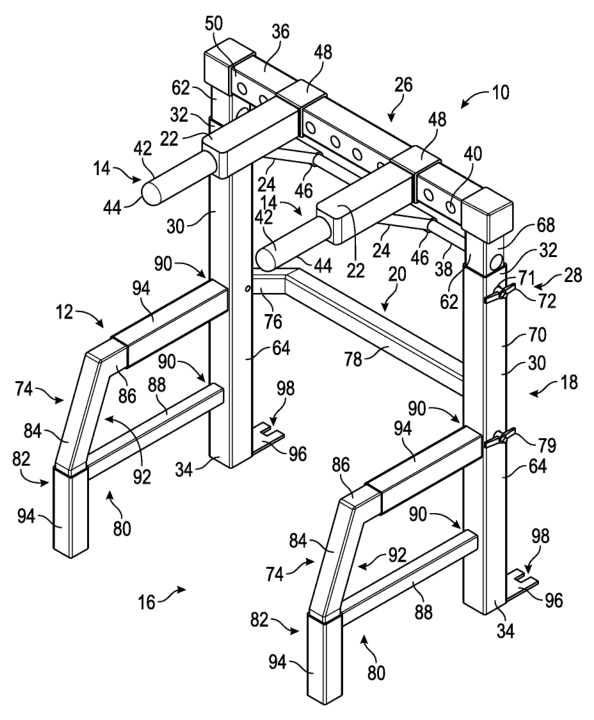
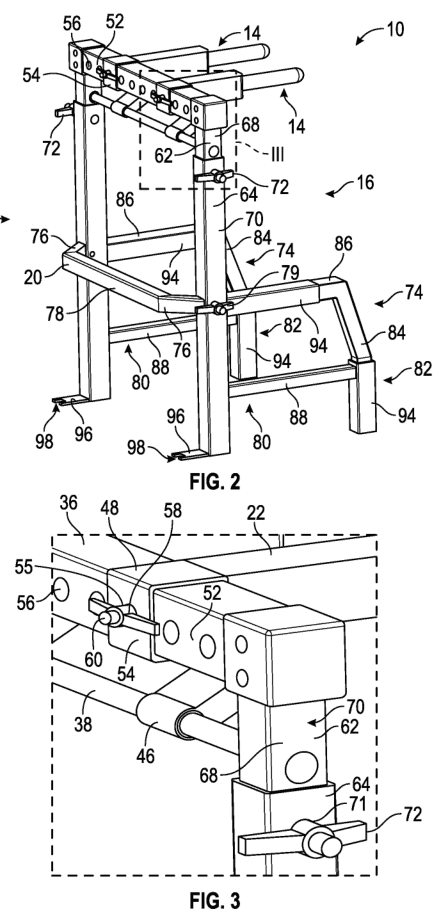
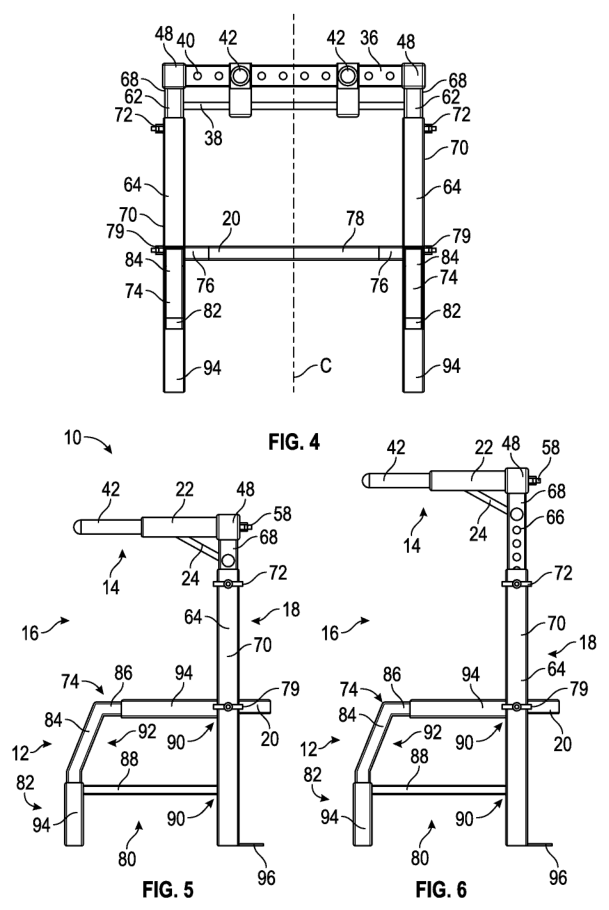
A freestanding triceps-dip and core-exercise stand with a base, two uprights whose length is adjustable, and a lateral cross-member that carries two handgrip assemblies. Each handgrip assembly has an upper (forward) stem and a lower (rearward/diagonal) stem; the handgrips slide laterally along the cross-member and the overall height is set by adjusting the uprights. Users performing dips, leg raises, or similar body‑weight moves are the primary customers.
(57) What the patent covered
The main independent claim covered a base with a pair of adjustable-length uprights, a horizontal cross-member spanning between those uprights, and a set of handgrips that extend forward from that cross-member. The handgrips must be laterally repositionable along the cross-member and their vertical position must be adjustable by changing the uprights’ lengths.
The distinctive part: Combining laterally sliding handgrip stems (upper forward and diagonal lower stems) with vertically adjustable uprights secured by individual locking pins.
Novelty 3/5. At the time of filing, adjustable-height dip stands and parallel bars were common; this patent’s novelty is a specific sliding lateral adjustment for each grip plus a two‑stem (upper forward, lower diagonal) grip assembly rather than a single tube.
Making it
Stamped or bent and welded steel frame (tube bending for uprights and cross‑member), machined/drilled holes for telescoping uprights and pin locks, slip‑fit stems, cut-to-length rubber or foam grip sleeves, final assembly with fasteners.
Materials: steel tubing (square or round), plastic or rubber handgrip covers, foam padding for grips, steel locking pins
Manufacturability 4/5. Relatively straightforward: telescoping steel tubes and a few sliding stems require tube bending, welding and drilled holes plus simple parts like pins and grips; low to moderate part count and hand assembly for pin insertion and padding placement.
Is anyone buying?
Comparable products are on sale; this exact design wasn't found. Typical retail price: $70–$399. Lowe's listing for a 4-height, 5-width adjustable freestanding dip bar; BullBar 2.0 is a dedicated freestanding pull-up/dip station with 81 in fixed height and 400 lb rating; Calena Frame Training Station markets a freestanding frame with adjustable dip bars and multiple exercises.
- SUGIFT Adjustable Dip Bar Station in Black for Home Gyms · Lowe's$70.99
- BULLBAR 2.0 — Portable Pull-Up & Dip Station (Fixed Height) · BULLBAR$399.00
- Calena Frame Training Station (Power Tower with Dip Station) · Calena Wellness
This demand check was run with a web search in the week of Sep 28, 2026. Listings change often, so treat it as a starting point for your own research.
Who buys it: home gym users and small studios wanting a compact dip/leg‑raise station
Before you make it
We didn't find any related continuation or divisional patents still in force, although that doesn't rule out design patents, trademarks or unrelated patents covering the same product.
None obvious, practical issues are standard fitness‑equipment concerns such as structural strength ratings, wobble at tall settings, and crowded market segments rather than a narrow enforceable claim.
Owners occasionally revive lapsed patents (about 1.5% are), and this page is a research lead rather than legal advice, so get a freedom-to-operate opinion before you manufacture anything.