Foam pillow with asymmetric raised side ridges and removable trough insert
A contoured foam sleep pillow with two raised longitudinal side ridges of different heights, a central trough between them, and elongate passages inside the ridges that open into the trough. The trough holds a second body of a different material and the ridge passages can receive removable elongate elements; an outer cover encloses everything. Intended for sleepers who change positions and want adjustable height, firmness, or a different insert material for cooling or heating.
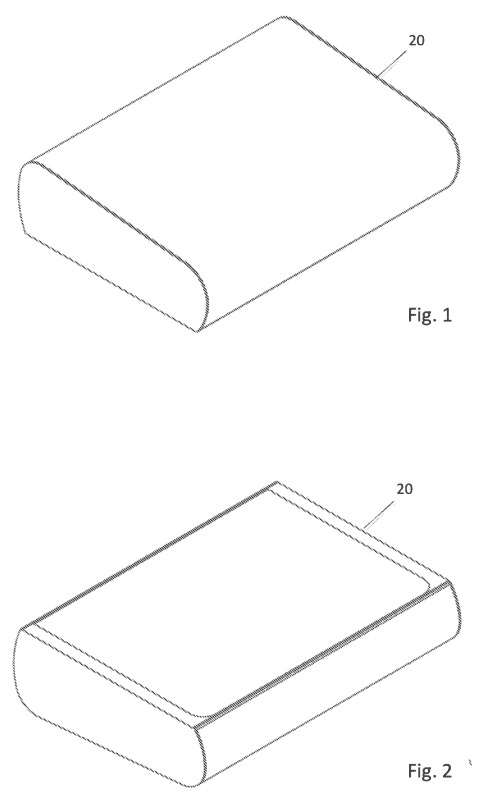
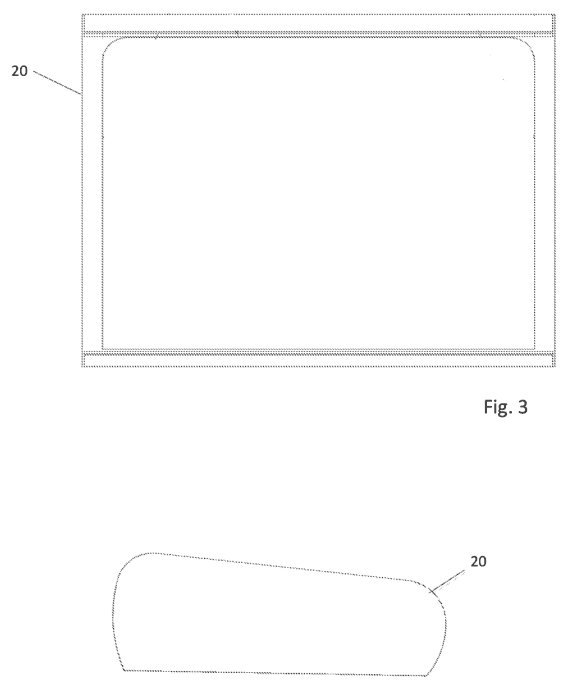
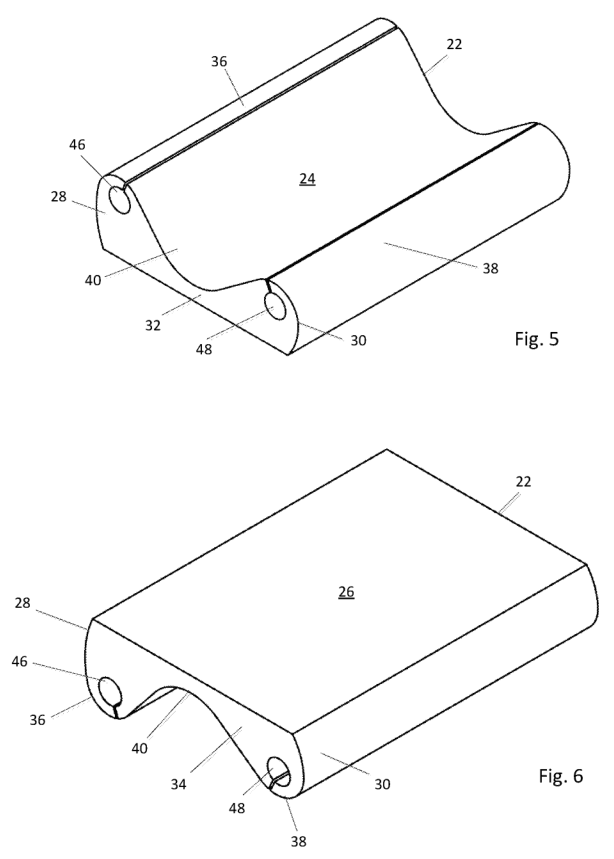
(57) What the patent covered
The independent claim covers a foam pillow body that has two raised ridges running along the long sides at different heights, a trough on the top surface between those ridges, elongate passages inside each ridge with slots that open into the trough (providing exterior access), a second body of a different material placed in the trough, elongate elements that can be placed in the ridge passages, and a cover that substantially encloses the bodies.
The distinctive part: Combines asymmetric side ridges with internal, accessible elongate passages and a different-material insert sitting in a central trough.
Novelty 3/5. Contour pillows and removable inserts were already common, but the specific arrangement of unequal-height longitudinal ridges with internal passages that open into a central trough is a clever assembly-level improvement on existing contoured pillows.
Making it
molded foam main body (slab or molded PU), routed or molded internal passages and slots, separate molded/laminated trough insert (gel/foam), sewing or zipper assembly of cover, manual insertion of elongate elements during final assembly
Materials: polyurethane foam (main body), different foam or gel pad for trough insert, flexible polymer or fabric sleeve cover, possible foam, plastic, or fabric-wrapped rods for elongate elements
Manufacturability 4/5. Requires a molded or CNC-routed foam blank with internal channels and through-slots plus a separate insert and cover; part count is moderate and final assembly mainly hand insertion and sewing.
Is anyone buying?
Comparable products are on sale; this exact design wasn't found. Typical retail price: $80–$109. Pillows with adjustable height layers and removable inserts are actively sold; CPAP-focused and modular contour designs appear on US-facing retailers; Regen Align advertises multiple height options and washable components.
- Contour CPAPMax with Cool Gel Pillow · Contour Living$79.99
- Regen CPAP-compatible Modular Contour Pillow (Regen Align) · Regen Pillow$109.00
This demand check was run with a web search in the week of Sep 21, 2026. Listings change often, so treat it as a starting point for your own research.
Who buys it: sleepers seeking adjustable height/firmness or cooling inserts
Before you make it
We didn't find any related continuation or divisional patents still in force, although that doesn't rule out design patents, trademarks or unrelated patents covering the same product.
None obvious, practical issues are comfort testing and a crowded pillow market; claims are structural and fairly specific, not broad functional language.
Owners occasionally revive lapsed patents (about 1.5% are), and this page is a research lead rather than legal advice, so get a freedom-to-operate opinion before you manufacture anything.